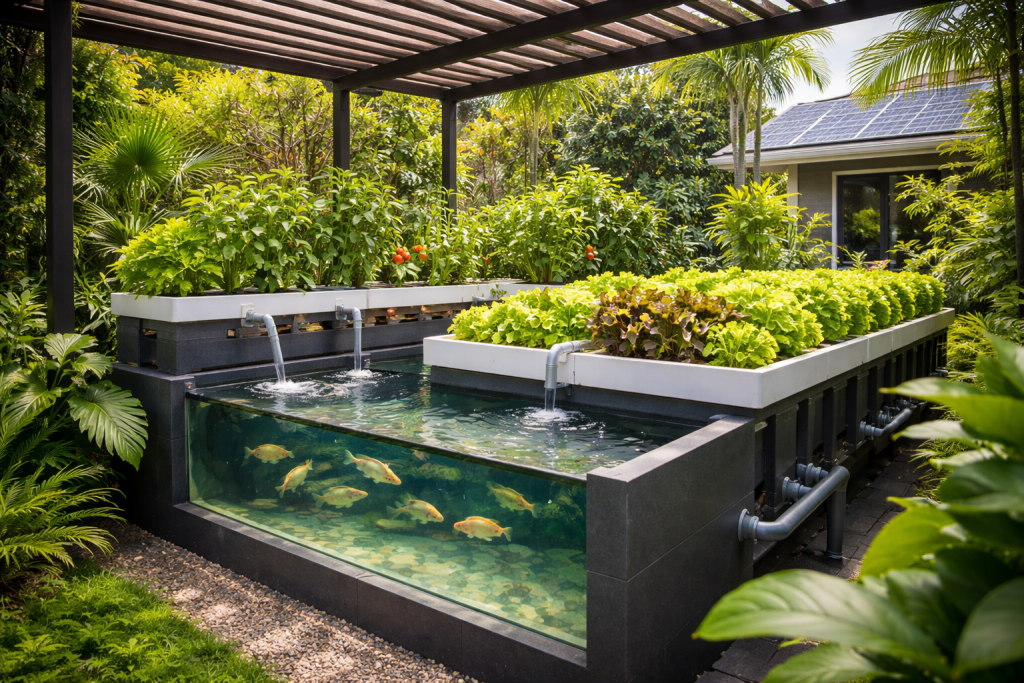
As Cebu becomes more urbanized and land becomes more expensive, homeowners and developers are looking for smarter, sustainable solutions.
One innovation gaining attention is aquaponics.
But what exactly is aquaponics — and can it work in Cebu?
Let’s break it down.
What is Aquaponics?
Aquaponics is a system that combines:
🐟 Aquaculture (raising fish)
🌱 Hydroponics (growing plants without soil)
In this system:
- Fish produce waste.
- Beneficial bacteria convert waste into nutrients.
- Plants absorb those nutrients.
- Clean water returns to the fish tank.
It’s a natural, closed-loop ecosystem.
No soil.
Minimal water waste.
Highly efficient food production.
Why Aquaponics Makes Sense in Cebu
Cebu’s climate is ideal for year-round plant growth.
Here’s why aquaponics is becoming attractive locally:
1. Limited Land Space
Urban lots in Cebu City are getting smaller. Aquaponics allows vertical farming in compact areas.
2. Water Efficiency
Compared to traditional farming, aquaponics uses up to 90% less water.
3. Growing Interest in Sustainability
Modern homeowners now want:
- Organic produce
- Self-sustaining systems
- Eco-friendly house designs
4. Heat & Climate Adaptability
Properly designed systems can thrive in Cebu’s tropical climate.
How Aquaponics Can Be Integrated Into Modern Homes
Aquaponics isn’t just for farms.
It can be integrated into:
- Rooftop gardens
- Backyard urban farms
- Semi-commercial rental properties
- Sustainable residential developments
- Eco-resorts and Airbnb properties
With proper architectural planning, it can even become a design feature.
Imagine a modern Cebu home with:
- Clean concrete lines
- Open-air ventilation
- Integrated aquaponics garden
That’s both aesthetic and functional.
Basic Components of an Aquaponics System
A typical residential system includes:
✔ Fish tank
✔ Grow beds
✔ Water pump
✔ Biofilter
✔ Plumbing system
Common fish used in the Philippines:
- Tilapia
- Catfish
Common plants grown:
- Lettuce
- Kang Kong
- Pechay
- Basil
- Tomatoes
Estimated Cost of Setting Up Aquaponics in Cebu
Costs vary depending on scale.
Small backyard setup:
₱30,000 – ₱80,000
Mid-size residential system:
₱100,000 – ₱250,000
Large semi-commercial setup:
₱300,000+
Cost depends on:
- Structural support
- Waterproofing
- Plumbing design
- Pump system quality
Proper planning during construction reduces retrofitting costs later.
Is Aquaponics Worth the Investment?
For homeowners:
✔ Fresh organic food
✔ Lower grocery expenses
✔ Sustainable lifestyle
For developers:
✔ Unique property selling point
✔ Eco-conscious branding
✔ Higher property value
For resorts & Airbnbs:
✔ Strong marketing appeal
✔ “Farm-to-table” experience
Construction Considerations Before Installing Aquaponics
Aquaponics requires structural and engineering planning.
Important factors:
- Load-bearing capacity (especially rooftop systems)
- Waterproofing
- Proper drainage
- Electrical safety
- Pest control planning
- Sunlight orientation
Poor planning can lead to leaks and structural issues.
This is why integration should be considered during the design and construction phase, not after turnover.
The Future of Sustainable Construction in Cebu
As Cebu faces:
- Rising food prices
- Urban congestion
- Climate challenges
Integrated systems like aquaponics may become part of next-generation homes.
Forward-thinking homeowners and developers are already exploring it.
Planning a Sustainable Project in Cebu?
At Akiro Construction, we help clients design and build:
✔ Sustainable residential homes
✔ Modern eco-conscious developments
✔ Smart structural systems
✔ Efficient drainage and plumbing solutions
If you’re considering integrating aquaponics into your property, early planning makes all the difference.
👉 Learn more about our team:
https://akiroconstruction.com/about
👉 Request a consultation:
https://akiroconstruction.com/contact

Leave a Reply